.bmp)
Mathematics
Explore how the Mathematics department builds problem-solving skills through Maths, Principles of Accounts, and Computer Applications, preparing students for real-world challenges.
About the Department
1. Aims
The Mathematics Department comprises three units: Mathematics, Principles of Accounts (POA), and Computer Applications (CPA)/Computing. Together, these units aim to equip students with essential knowledge, skills and 21st Century Competencies to become confident, critical thinkers and independent learners
Mathematics
The Mathematics unit aims to develop students’ mathematical understanding through reasoning, communication and modelling. By emphasising key mathematical concepts, their interconnectedness and metacognitive strategies, we nurture reflective, self-directed learners who can apply mathematical knowledge and skills confidently to solve real-world problems.
Mathematics Curriculum Framework
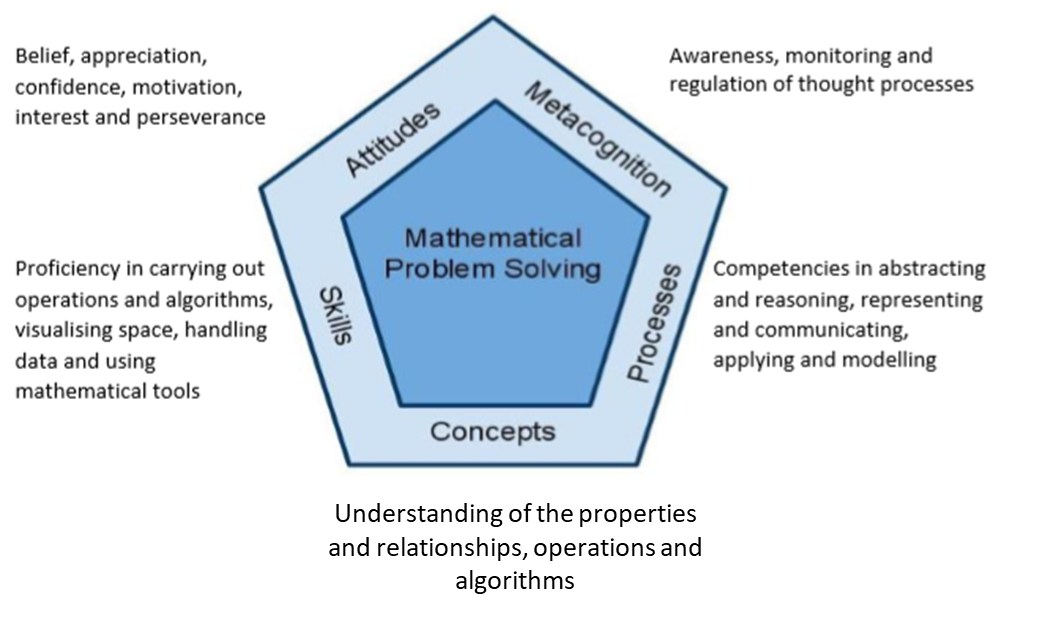
Mathematics Curriculum Framework
Principles of Accounts (POA)
The Principles of Accounts unit aims to equip students with the knowledge and skills to prepare, communicate and interpret accounting information. Students learn to analyse financial and non-financial information to make informed business decisions, while developing critical thinking and problem-solving skills.
Computer Applications (CPA) / Computing
The CPA/Computing unit aims to develop students’ understanding of computer systems, programming and computational thinking. Through hands-on learning and the application of digital and media tools, students explore cybersecurity and emerging technologies while developing creativity, collaboration, resilience and inventive thinking. These experiences equip students with essential digital competencies to navigate an increasingly technology-driven world
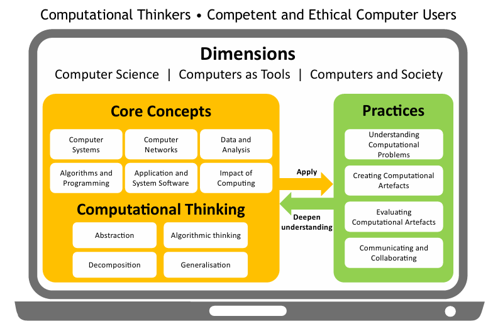
Computing Curriculum Framework
Learning Opportunities
Mathematics
We provide meaningful and engaging learning opportunities that enable students to:
• Deepen Conceptual Understanding – Explore mathematical concepts through a variety of learning approaches, including the use of digital tools and Information and Communication Technology (ICT).
• Apply Mathematics in Real-World Contexts – Connect mathematical knowledge and skills to authentic situations and everyday experiences.
• Develop Mathematical Reasoning and Communication – Articulate their thinking, explain their reasoning and make connections between mathematical concepts through diverse tasks and activities.
• Build Confidence and Interest – Develop curiosity, perseverance and a positive attitude towards learning Mathematics.
Principles of Accounts (POA)
The Principles of Accounts (POA) curriculum provides students with opportunities to develop practical accounting knowledge, skills and values through meaningful learning experiences.
Students learn to prepare, interpret and communicate accounting information, while understanding how businesses use financial and non-financial information to make informed decisions.
Through interactive activities, real-world business scenarios and problem-solving tasks, students develop critical thinking, financial literacy and transferable skills that can be applied in their daily lives. These learning experiences also foster curiosity and interest in accounting and business practices.
Computer Applications (CPA)
The Computer Applications (CPA) curriculum equips students with essential digital knowledge and practical skills to navigate and contribute confidently in an increasingly technology-driven world.
Through hands-on and experiential learning, students develop competencies in a range of digital applications, including:
• Productivity Tools – Word processing, spreadsheets, calculations and data visualisation.
• Digital Media and Design – Computer graphics, image editing, multimedia presentations and digital content creation.
• Programming and Game Design – Developing computational thinking and problem-solving skills through programming and game-based projects.
• Internet Technologies – Exploring online tools and applications to support learning, communication and digital literacy.
Students apply their learning through authentic tasks and projects that integrate multiple software applications. Guided activities and practical challenges encourage independent learning, creativity and problem-solving.
These experiences build students' confidence in using technology and lay a strong foundation for further studies in computing and media-related fields, as well as future learning and workplace readiness.
Key Programmes (2026)
🥧 World Pi Day
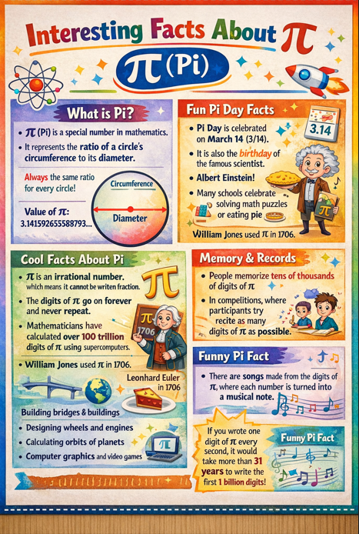
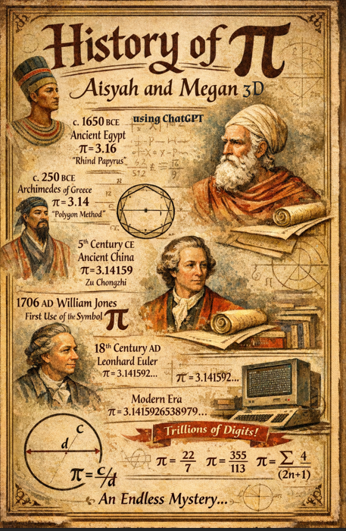
In celebration of World Pi Day on 14 March, our students explored the fascinating world of Pi (π) through the creative use of Generative Artificial Intelligence (AI).
Students across different levels discovered the history of Pi, learnt about renowned mathematicians and uncovered intriguing mathematical facts. They showcased their learning through creative and informative posters, combining mathematical exploration with digital creativity.
To round off the celebrations and welcome the new school term on a sweet note, all students and staff received an apple pie on 27 March.
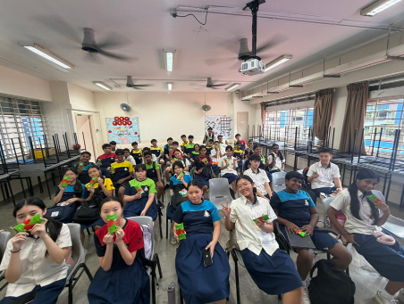
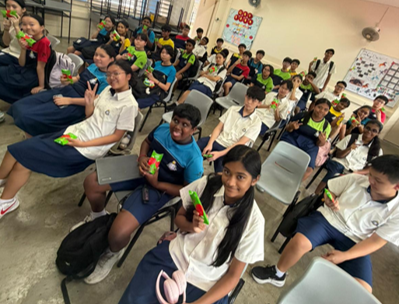
Learning Beyond the Classroom: Mathematics Learning Journey to Changi Airport
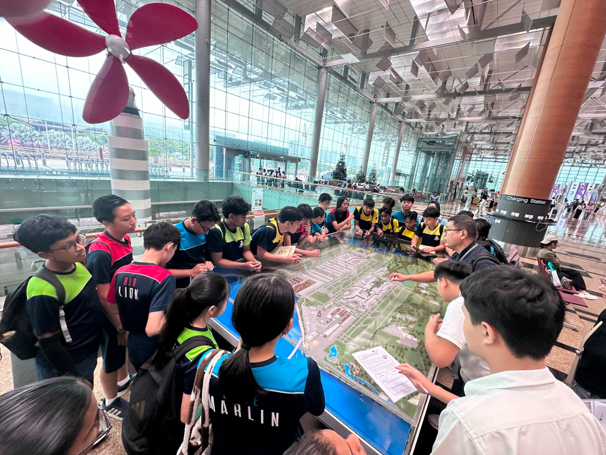
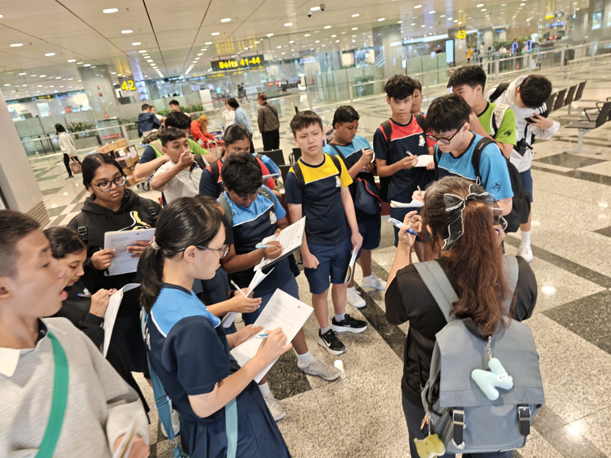
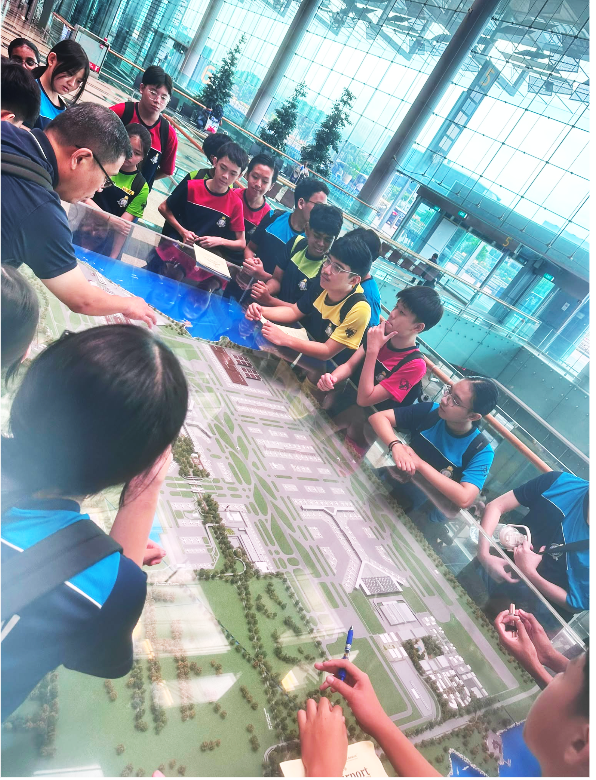
On 8 July 2026, our Secondary Two students embarked on a learning journey to Changi Airport, where they explored the practical applications of Mathematics and English Language in authentic, real-world contexts.
Applying Mathematics in Everyday Life
Students applied mathematical concepts such as percentages, data handling, graphs, estimation and measurement to solve practical problems. Through activities involving budgeting and currency conversion, they discovered how Mathematics plays an important role in everyday situations, particularly in travel and financial decision-making.
Developing Communication and Reasoning Skills
The learning journey also provided opportunities for students to strengthen their English Language and communication skills. Working collaboratively, students described their observations, explained their mathematical reasoning and justified their decisions. They consolidated their learning by presenting their findings confidently and clearly.
This interdisciplinary experience helped students appreciate the relevance of Mathematics beyond the classroom while developing critical thinking, problem-solving, collaboration and communication skills.
Discovering Changi Airport’s Role in Singapore
Students gained a deeper appreciation of Changi Airport’s significance as a global aviation hub and its contributions to Singapore’s tourism industry and economy. They also developed an understanding of how the airport connects Singapore to the world and strengthens the nation’s global standing.
Strengthening Collaboration and Teamwork
Through group activities, students worked collaboratively to solve problems, make informed decisions and share their findings. These experiences fostered teamwork, communication and a sense of shared responsibility.
Developing Future-Ready Competencies
The learning journey provided meaningful opportunities for students to develop essential 21st Century Competencies (21CC), including critical thinking, communication, collaboration, civic literacy, global awareness and responsible decision-making.
Overall, the experience reinforced the relevance of classroom learning to real-world contexts, inspiring students to become confident, collaborative and future-ready learners.
Competitions and Achievements (2026)
Singapore Mathematical Olympiad (SMO)
Our students demonstrated their mathematical abilities and problem-solving skills at the Singapore Mathematical Olympiad, held on 3 June 2026. We are proud to celebrate their achievements in this prestigious competition.
Junior Section
Bronze Award: Liu Yitong
Senior Section
Bronze Award: Deng Muhan
Honourable Mention: Ye Zimo
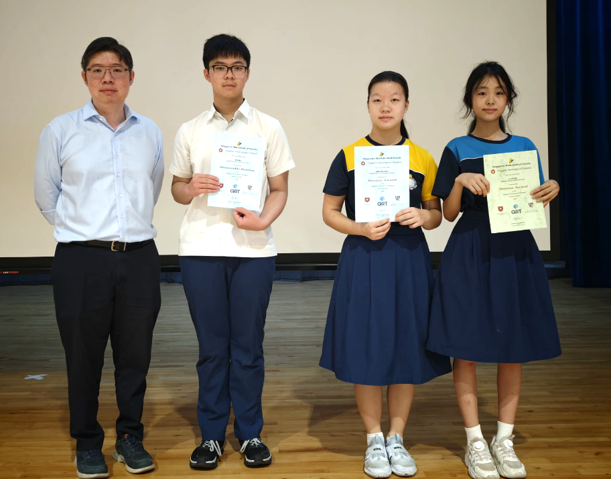
Congratulations to our award recipients for their commendable achievements! Their success reflects their dedication, perseverance and passion for Mathematics.
SP Numbersplan 2026 – Champions!
Team Sembawang emerged as Champions of SP Numbersplan 2026, outperforming teams from more than 30 secondary schools.
Our five-member team, comprising Lakshhmi, Jovian, Ryan, Rithvika and Zheianna, demonstrated exceptional teamwork, analytical thinking and problem-solving skills. Each member took on a specialised role as they worked collaboratively under time pressure to investigate a simulated money-laundering case and prepare a comprehensive investigation report.
Their outstanding achievement reflects their perseverance, critical thinking and ability to apply knowledge and skills to real-world challenges.
POA Quest 2026
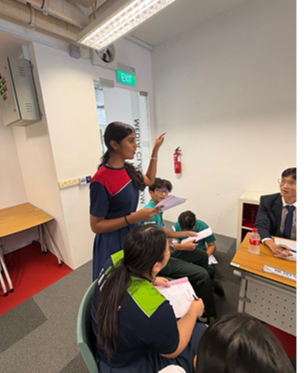
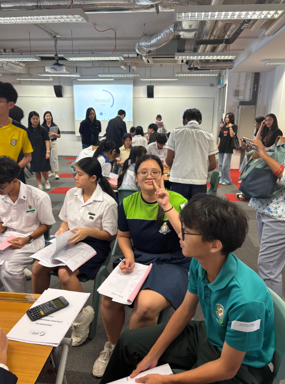
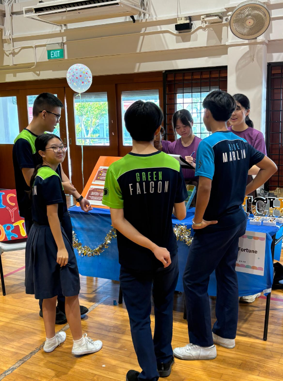
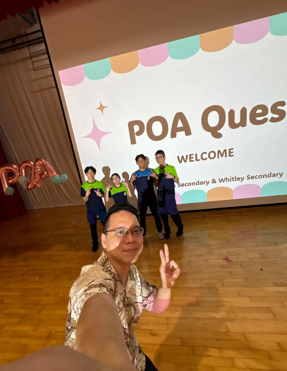
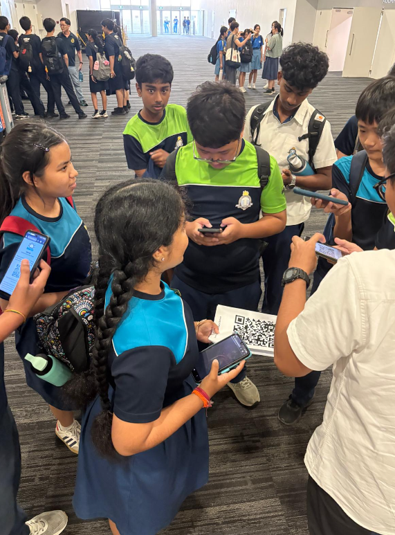
Our Principles of Accounts (POA) students participated in POA Quest 2026, hosted by Zhonghua Secondary School.
Through engaging student-led challenges, students applied their accounting knowledge and skills in practical contexts while strengthening their critical thinking, problem-solving and teamwork. The experience also provided opportunities for students to collaborate with peers from other schools and deepen their interest in accounting.
ICAS Mathematics Competition 2026
Our students demonstrated their mathematical knowledge, reasoning and problem-solving skills at the ICAS Mathematics Competition, held in August 2026.
We are proud to celebrate the achievements of the following students, whose commendable performances reflect their dedication, perseverance and passion for Mathematics.
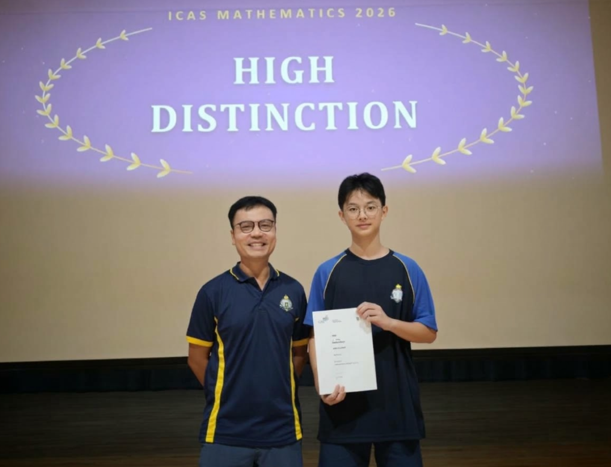
High Distinction: Wang Qiyu
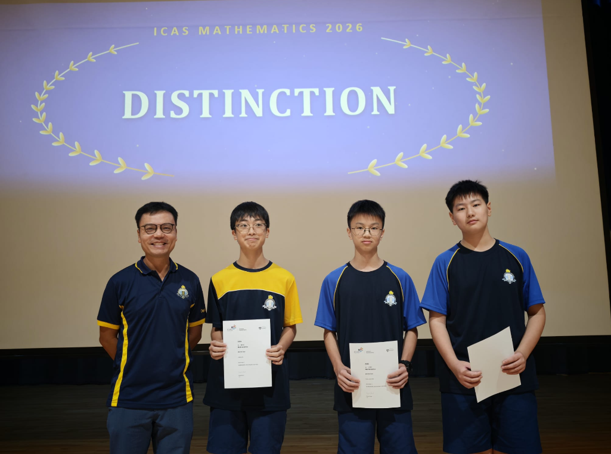
Distinction Awards: Kong Deqian, Qian Jiachen, Yang Zhi
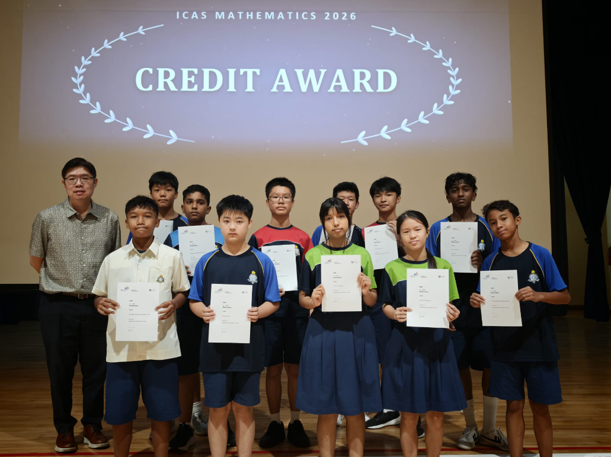
Credit Awards: Askari Izzan bin Muhammad Salihin, Chong Ruo Yu Kayla, Daniel Rizuan Elias Ikhwan Jamir, Lim Ming Zhang, Low Jevin Jun On, Muhammad Adam bin Muhammad Fadhli, Rajamohan Ashvin Karthikeyan, Seah Ing Renn, Shun Le Than Thar, Zhou Zhenglin
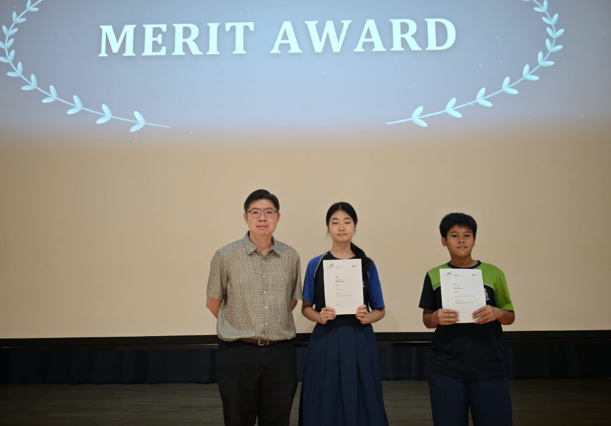
Merit Awards: Ouyang Lexu, Rayyan Azfar bin Mohammad Faizal
Inter-School Computing Competition (ISCC) 2026
Our students achieved outstanding results at the Inter-School Computing Competition (ISCC) 2026, which attracted 86 Scratch game submissions from 40 schools.
We are proud to celebrate the achievements of three students who received Gold Awards for their creativity, programming skills and innovative game designs.
Gold Award Recipients
6th Place: Lau Zhi Ying – Bananas
8th Place: Christie Tan Jia Yi – Honey and Bomb Game
10th Place: Luise Lim En Ci – Diamond
Through this competition, students demonstrated computational thinking, creativity and problem-solving skills as they applied their programming knowledge to develop engaging digital games.
Congratulations to our award recipients for their commendable achievements! Their success reflects their dedication, perseverance and passion for computing.
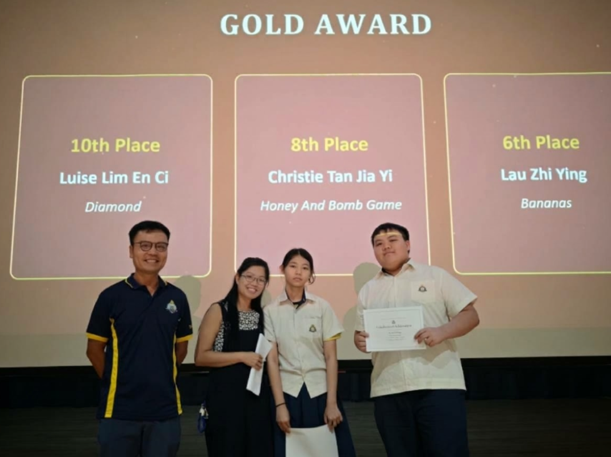
Gold Award Recipients